
Ruched Chiffon Nightdress Fit: How to Adjust Side Slits and Drape
Adjustable side ties do more than change the look. They alter slit height, hem balance and how a chiffon nightdress moves. Use this practical fit sequence before deciding which setting feels right.

Secure the neckline and straps before changing the skirt
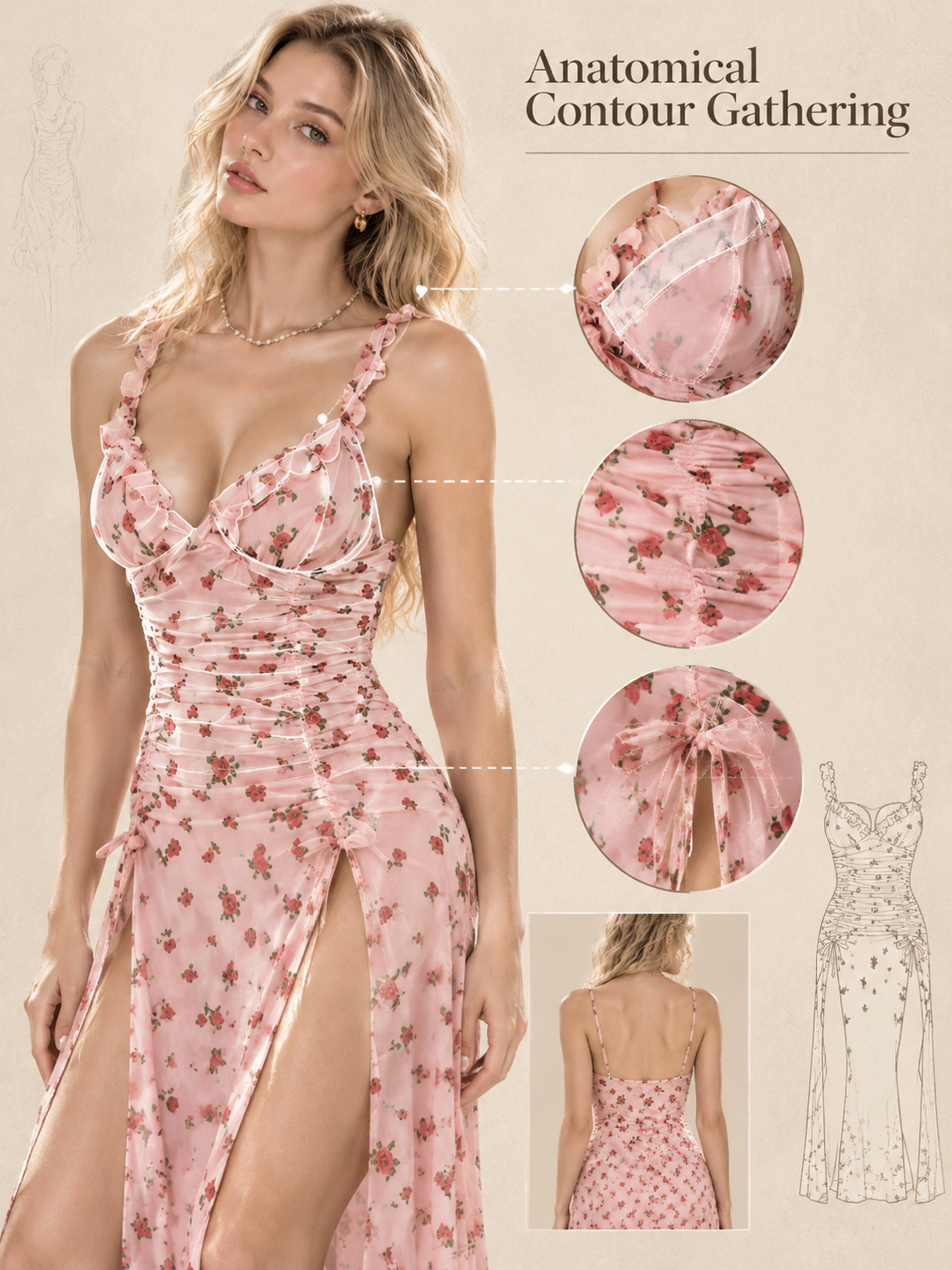
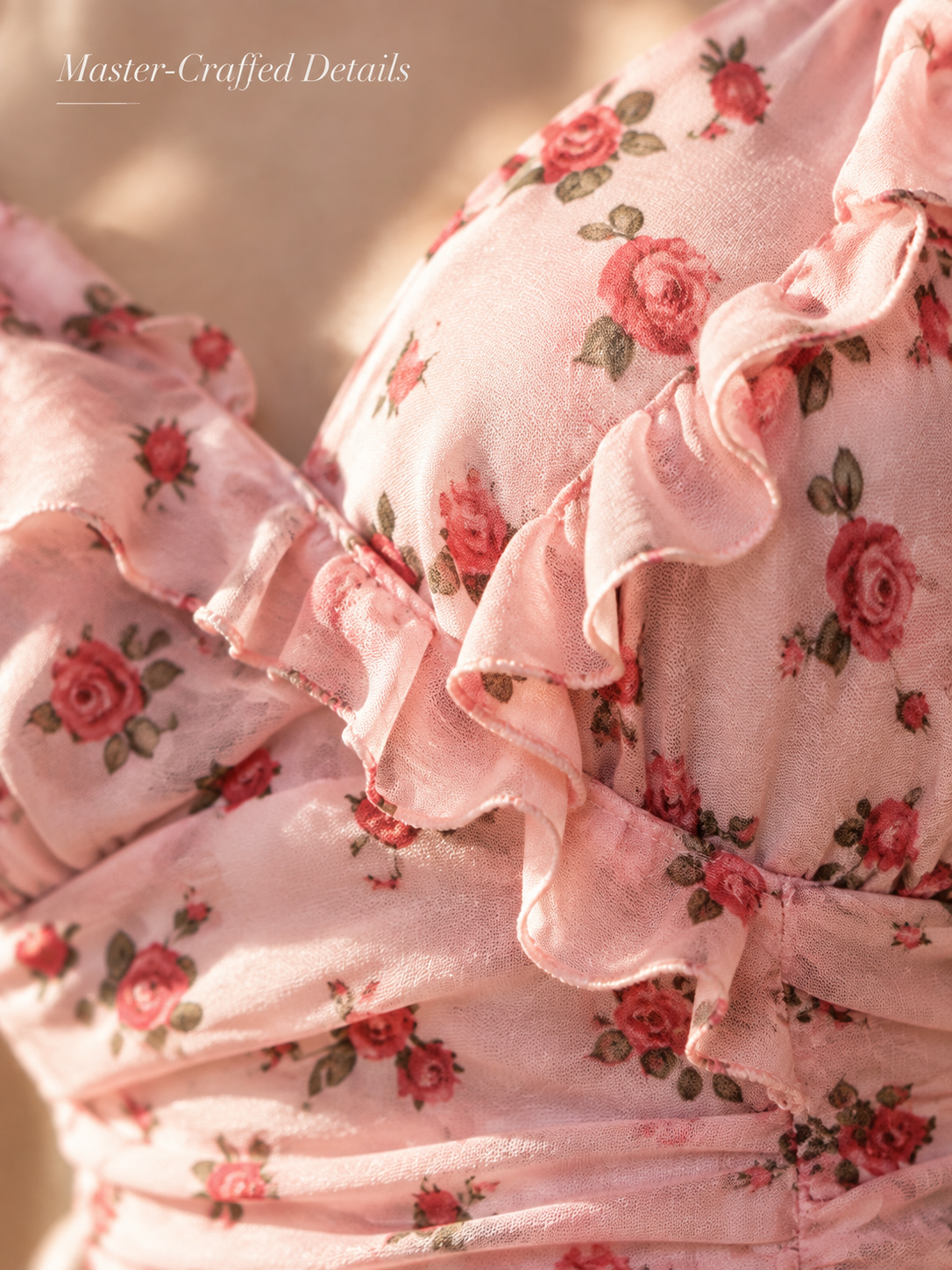
The Rose Garden design combines a shaped neckline, ruffled shoulder straps, a flowing midi skirt and ruching on both sides. Begin with the straps because their length determines where the neckline and underbust seam sit. If the upper body is positioned too low, shortening the side ties can make the whole garment appear smaller without solving the real fit problem.
Once the neckline feels secure, smooth the chiffon down over the waist and hips. Look for a clean vertical fall rather than horizontal tension. Chiffon is light and fluid, but it still needs enough ease to move instead of clinging at one point.
- Neckline stays in place when arms are raised
- Ruffled straps sit securely without digging
- Skirt falls without horizontal pull lines
- Both side channels move freely before tying

Read the upper-body fit
A shaped neckline should lie smoothly without rolling or gaping. Adjust straps gradually and compare both sides in a mirror.
Change one variable at a time
Raise one side slightly, compare the drape, then match the other side if you want symmetry. Small adjustments are easier to evaluate.
Test motion, not only the mirror
Walk, sit and take a stair-sized step. The setting should preserve the coverage and movement you expect in real use.
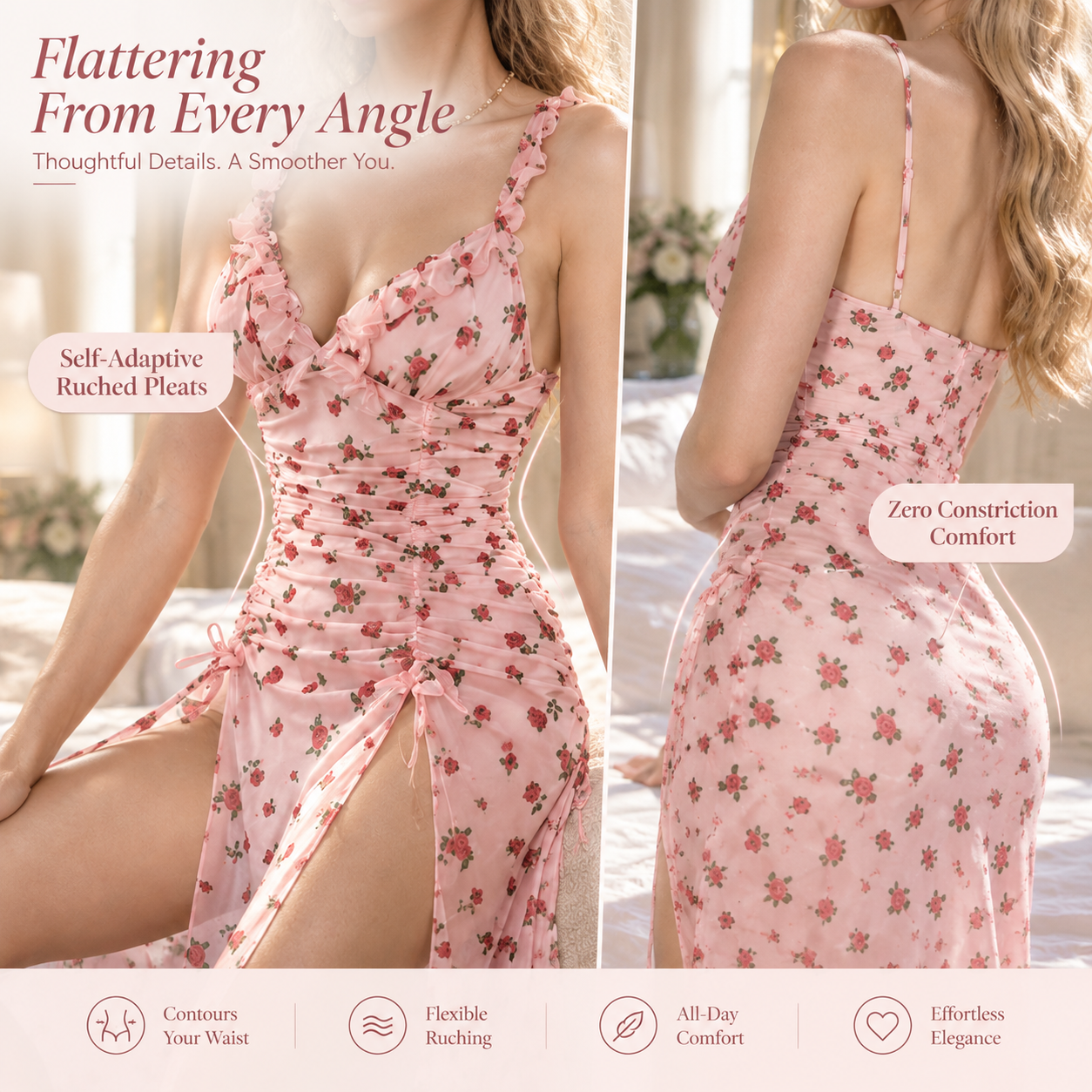
Three side-tie settings create three different results
Relax both ties for a longer hem and softer, straighter drape. This is the easiest setting for checking the garment’s base length.
Gather both sides to the same height for balanced slits and a symmetrical silhouette. Compare knot position as well as hem height.
Raise one side more than the other for a directional look. Confirm the higher slit remains comfortable while sitting and walking.
Leave enough slack in the channel so the skirt does not pull sharply across the hips. Retie after movement if the knot migrates.
If you are comparing lightweight nightwear fabrics, read our satin, lace and mesh buying guide.
A five-minute fit and care check
Complete the movement test before removing tags, and always follow the sewn-in care label.
For a complete delicate-garment routine, see how to wash and store delicate nightwear.
Ruched Chiffon Nightdress FAQ
What does adjustable side ruching change?
It gathers the fabric and changes both the slit height and the way the skirt drapes. Shortening one side creates more leg exposure, while loosening both ties gives a longer, smoother line.
Should a chiffon nightdress fit tightly?
The shaped upper area should feel secure, but the skirt should retain enough ease to fall and move without horizontal pulling.
How do I keep the side ties even?
Set both ties while standing in front of a mirror, walk a few steps, then compare the hem and knot position before finalizing them.
How should chiffon be washed?
Follow the sewn-in care label. As a general precaution, protect ties and ruffles from snagging, use gentle handling and avoid high heat.