
Silky Cami Sleepwear: What to Check Before You Buy
“Silky” tells you how a fabric may feel or look—not what fiber it contains. This guide shows how to read the material language, adjust a cami neckline and protect lace trim after purchase.
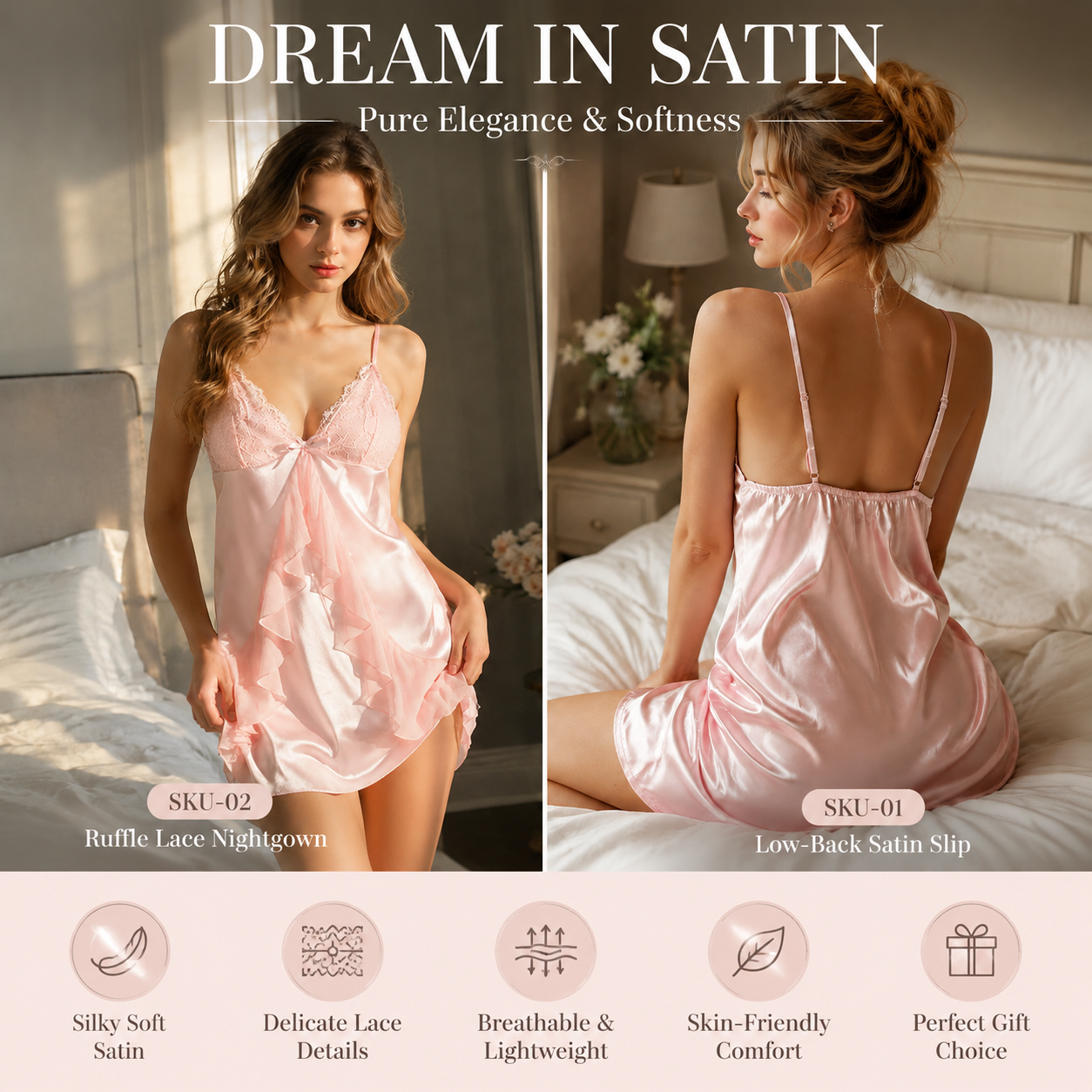
Silky is a sensory description, not a fiber declaration
A product can look satin-like or feel smooth without containing silk. “Silky,” “satin finish” and “silk-touch” usually describe hand-feel or sheen. The fiber line—such as polyester, nylon, viscose or silk—is the information to use when composition matters.
That distinction changes expectations. Fiber content influences breathability, heat response, drying time and price, while weave and finishing influence shine and surface feel. For a deeper material comparison, read our satin vs lace vs mesh nightwear guide.
- Read the composition line, not only the product name
- Check whether stretch comes from elastane or construction
- Use the sewn-in label as the final care authority
- Ask before buying when composition is not stated clearly

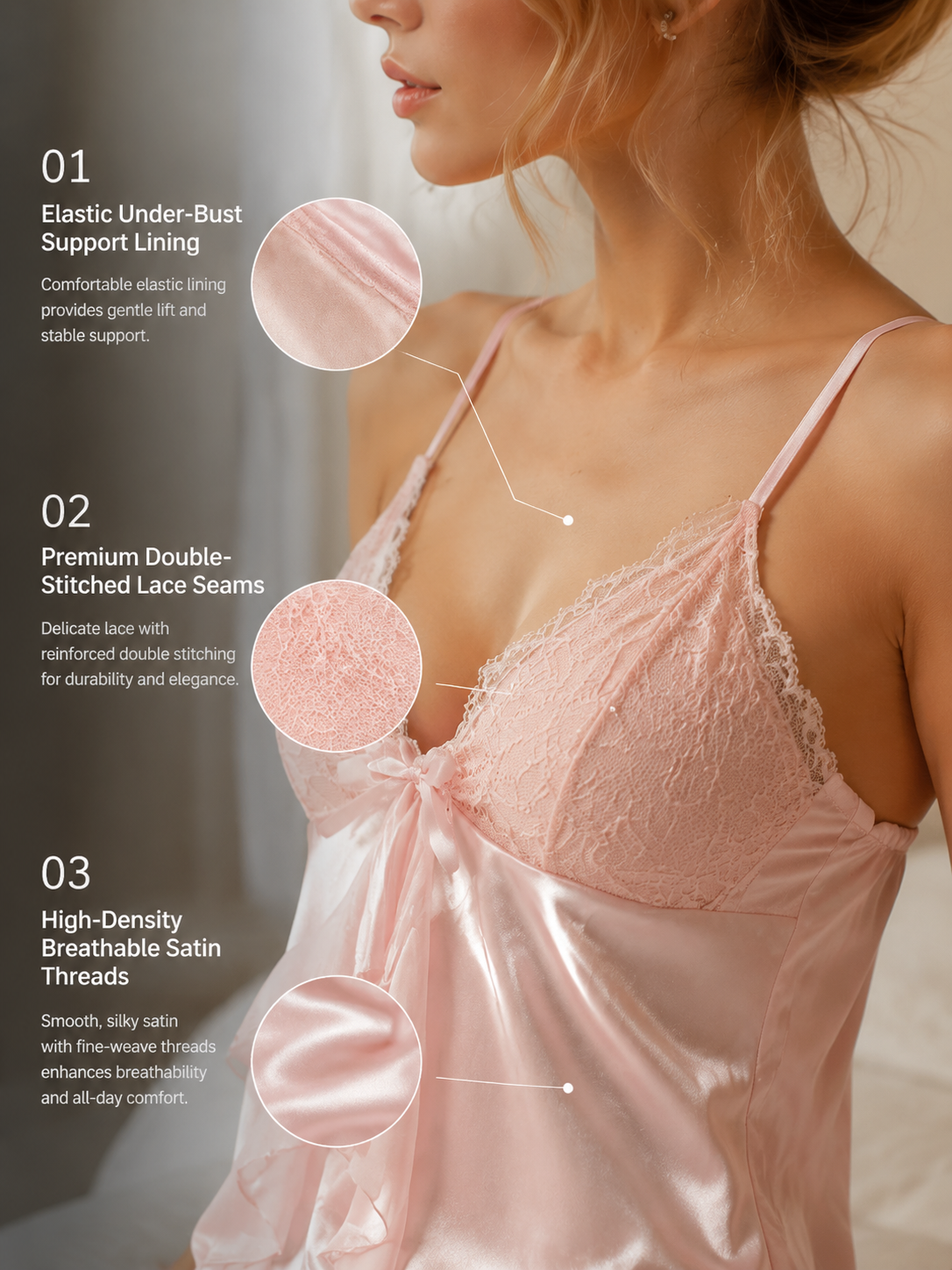
Check lace where it meets the body
Look for a flat, soft edge at the neckline and underarm. Decorative lace should not need to be stretched hard to sit flat, and rough jewelry or exposed hooks should be kept away from it.
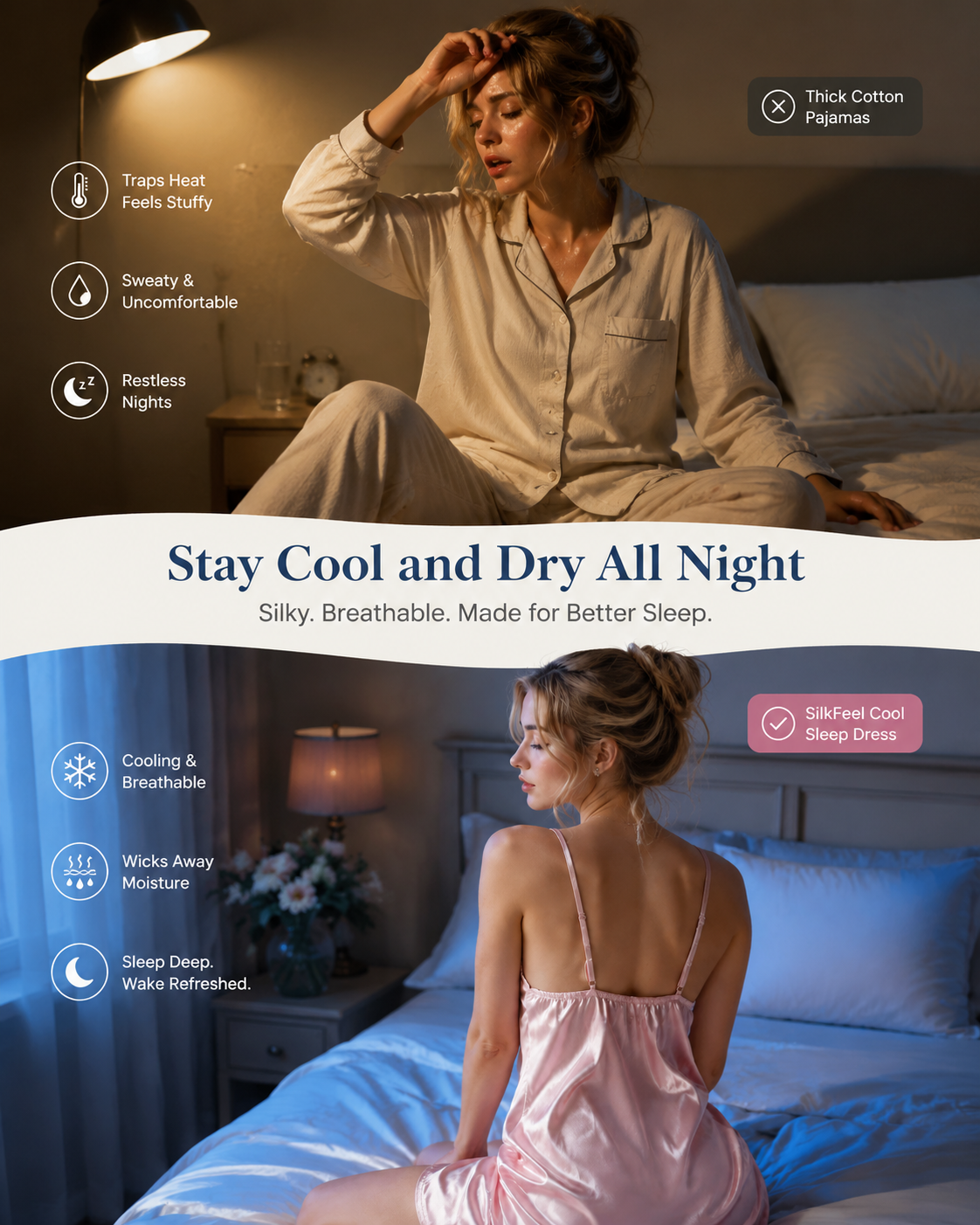
Adjust straps after centering the garment
Loosen both straps, settle the side seams vertically and center the neckline. Shorten each side in small equal steps. Over-tightening can lift the front while pulling the back and underarms out of position.
Choose ease for sleeping, not posing
Stand, sit, reach and lie on your side. A sleep-ready cami should allow the ribcage and waist to move without the hem climbing or the straps taking all the tension.

Decide whether the cami works for real movement
It should remain balanced when you raise your arms; constant readjustment usually means the strap setting or size is wrong.
The edge should not cut in or stand far away. Check both sides because uneven straps can disguise an asymmetrical fit.
For lounging and sleep, leave enough room to sit and turn comfortably. Compare garment measurements with a cami you already enjoy wearing.
A hem that twists or climbs during a short walk may indicate too little ease through the waist or hips.
When a listing uses a broad “one size” label, follow the measurement process in our US shopper’s one-size checklist.
A care routine for lace-trim, satin-look sleepwear
The sewn-in label wins whenever it differs from general advice.
For a step-by-step routine across delicate fabrics, continue with how to wash and store delicate nightwear.
Silky Cami Sleepwear FAQ
Does silky sleepwear mean it is made from silk?
No. Silky describes a smooth feel or sheen; it does not identify the fiber. Check the product composition and sewn-in label for the actual material.
How should adjustable cami straps fit?
Begin with both straps loose, center the neckline, then shorten each side in small equal steps. The neckline should stay balanced without digging or sliding.
What can I wear under a low-neck cami set?
Choose the coverage you prefer. A smooth, low-profile layer can add coverage without competing with lace trim; make sure its edges and hardware cannot catch the fabric.
Can satin-look sleepwear go in a dryer?
Only if the sewn-in care label permits it. High heat can affect sheen, elastic and lace, so never infer care instructions from appearance alone.